


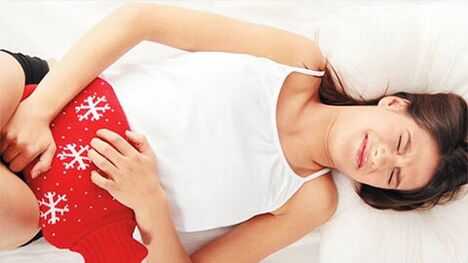
Cystitis is an inflammatory process that affects the inner walls of the bladder.In the early stages it mainly affects the mucosal membrane, and in severe cases, it can spread to the muscle layer of the organ.
According to statistics, almost 35% of people (mainly female) between the ages of 20 and 40 are confronted with this pathology that it is up to 67% of all cases of urological diseases.
Important! However, the inflammation of the bladder is characteristic for both genders due to anatomical characteristics that they occur 6 to 8 times more often in women.A wider, straight and short urethra offers easy access to various urogenital infections.Age is smoothed in the frequency of occurrence in men and women due to the growth of prostatitis in older men and the associated secondary cystitis.
The diagnosis and treatment of pathology is involved in a urologist.Women often have to fall back on the help of a gynecologist.
Cystitis: forms and types of pathology
Depending on the presence of internal inflammatory sources, 2 types of cystitis are distinguished:
- Primarily - develops as an independent inflammation of the walls of a previously healthy bladder;found more often in women;
- Secondary - results from other diseases of the urea or the inflammation of the adjacent tissues and organs (for example in prostatitis in men).
Due to the nature of the course of the disease, they differentiate:
- Acute form;
- Chronic form - mixed symptoms without pain and combustion are characteristic.
The disease can be in the area of the cover:
- Total or general;
- FOCAL - for example, a cervix shape with damage to the neck of the bladder;
- With the lesion of the ureter triangle Lieto (Trigonit).
Note!The focus of the inflammation can cover the entire urinary system - in such cases cystitis is the first clinical manifestation of kidney stone diseases or pyelonephritis.
In view of the changes observed in the area of the lesion, differ:
- Katarrhal - classic acute inflammatory process with damage only mucus tissue;It is accompanied by severe hyperemia, swelling and the release of serous exudate (serous form);In a neglected case, it can go into a purulent form (with the release of the purulent exudate);
- Phlegmonus - a special type of purulent inflammation with buried purulent damage to the submucosal layer;
- Granulomatous - accompanied by plenty of rashes on the mucous membranes of the organ;
- Hemorrhagic - an inflammatory process accompanied by the release of blood in the urine;
- Interstitial - with the participation of deep muscle layers;
- Ulcerosa - with the formation of characteristic ulcerations of the mucous membrane of the inner walls;
- Inlapping - For a long time, no frequent ulcers with salts are overgrown;
- Cystic - with the formation of cysts on the submucosal organ;
- Gangrenous - with murder.
In view of the reasons, all cases are divided into two large groups of infectious and non -infectious cystitis.
Infectious shapes They develop under the influence of various urogenital and general infections.Differentiate:
- Specific pathologies - pathogenic (mainly bacteria) - chlamydia, gonococci, etc.;
- Not specific pathology die source of the disease is a variety of representatives of the conditionally pathogenic flora
Note!In rare cases, a combination can occur in response to tuberculosis infection of the kidneys.The disease is accompanied by a pronounced clinical picture.
Not -infectious cystitis - Develop as a result of non -biological damage to the organ mucous membranes.There are different types of pathological effects:
- Radial - negative impact on the tissue of radiation therapy or the spark exposure;
- Allergic or autoimmun - pathological reaction of the body to allergens (mainly personal hygiene products) or antigens from your own tissues;
- Traumatic - with chopped or cut wounds, with damage to the walls with urinary stones, catheter, foreign bodies;
- parasitic - under the influence of toxic parasites, in particular the blood school (type of flat worms);The risk zone mainly includes travelers in the Middle East and in Central Asia.
- Warmth - with burns, when washing with too hot solutions;
- Chemical toxic toxic, which are exposed to aggressive substances: medicines, concentrated metabolites, toxic substances, etc.;
How cystitis occurs: causes of pathology
The vast majority of cystitis has an infectious nature.In this case, the causal means can be both conditionally pathogenic bacterial e.Coli, streptococci, staphylococci, enterococci and frequent representatives of urogenital infection gonococci, trichomonas etc.
However, the aggression of microorganisms is not the main cause of the disease.For its successful effect, the body should be weakened by the influence of adverse external and internal factors.This includes:
- Chronic infections in other body systems - Carious tooth damage, intestinal diseases, various forms of acute respiratory viral infections, gynecological inflammation and hert;
- Vitaminosis and hypovinosis against the background of an unbalanced diet;
- Regular physical, nervous, mental overload as well as insomnia and lack of night sleep;
- Strong psycho -emotional stress;
- General weakening of the immune system, including for longer use of immunosuppressors;
- Humanization of the body, the effect of sudden temperature changes - for women it is sometimes sufficient to sit on a cold surface to start the inflammatory process in the pelvic organs, including the bladder.
- High sexual activity in the absence of a constant partner (non -traditional sexual practices and unprotected sex are particularly dangerous);
- Stagnant phenomena in the pelvic organs-sedient work and a sitting lifestyle in general, frequent constipation, incomplete emptying due to strictures of the urethra or the tumors of the bladder as well as a banal habit to "exist to the last";
- Bad or inappropriate body hygiene - in 90% of cases, the pathogen of the cystitis of E. coli, which enters into the bladder from the rectum;
- Wear synthetic linen, particularly narrow, press the pelvic organs;
- Abnormal development of urinary organs;
- Injuries and surgical interventions in the pelvic organs;
- Acute and greasy food.
Regardless of this, the cause of the disease of endocrine disorders (diabetes mellitus, taking hormonal medicines) and general fluctuations in the hormonal background should be mentioned.The latter reason is particularly characteristic for the female body if the deterioration in cystitis accompanies the periods of menstruation, pregnancy or menopause.
Symptoms of the disease
The first symptoms of cystitis are an increase in urine and symptoms in the lower abdomen.Otherwise everything depends on the shape of the disease and its cause.
General list of possible functions:
- Frequent urination, sometimes wrong;
- The urine has a muddy color, blood pollution (hematuria) and pus are possible;
- Pain in the lower abdomen (can be given to the lower back);
- Carve and burn in the urine;
- Constant feeling of the abundance of the bladder;
- Urine receives an unpleasant smell;
- daily or at night enuresis;
- Improve body temperature and general weakness.
In rare cases of acute form, chills, nausea and vomiting are possible.
Important! This disease is not characterized by a temperature above 37.5 degrees.If this indicator is excess, it is necessary to examine the entire urine system - the inflammatory process may have reached the kidneys.
In women, pathology often runs in acute form and is accompanied by a classic series of symptoms.
Men are characterized by a chronic course of the disease with greased symptoms, which is often accompanied by signs of a simultaneous diseases of sexual sphere (e.g. balanoposthitis or urethritis).
Diagnosis
A clear symptoms of the disease enables you to provide the main diagnosis after talking to the patient and the palpation.Additional instrumental and laboratory examination methods make it possible to determine the type and the shape of the disease, to identify the pathogen (with infectious lesion) and to prescribe the most effective therapeutic complex.
Instrumental diagnostics:
- Echoscopy (ultrasound) - determines the degree of the inflammatory process and enables the state of urinary and sexual systems to be evaluated at the same time.
- Endoscopy (cystoscopy) - Examination of the bladder cavity using the optical system of the cystoscope enables you to evaluate the condition of the internal integration, to identify possible pathologies and neoplasms.only carried out after the disappearance of acute phenomena;
- Cystography is an X beam test using an X -Ray contract.
Laboratory research:
- General urine analysis - check the pH value, the concentration of leukocytes, red blood cells, protein and uric acid salts;
- Investigation of the urine sediment for more precise results;
- BAKSEV - to identify an infectious pathogen;
- Tissue Biopsy, followed by a histological examination;
- PCR-diagnostics-so effective as possible when identifying sexual infections.
In some cases, the doctor can prescribe an analysis for blood biochemistry - it enables you to track the features of the function of the body with changes in the concentration of the main electrolytes (potassium, sodium, calcium) and to assess the activity of enzyme systems.
It is important for women to carry out a gynecological examination for the presence of "female" inflammation, which often become the cause or consequence of cystitis.
Attention! Inflammation of the urea is often a symptom for a more serious disease.Therefore, a differential diagnosis for tuberculosis, prostatitis (in men), cancer tumors, etc. is required.
How does the treatment work?
The acute form of cystitis is easy and quick in chronic.It is therefore very important to react to the first signs of the disease in good time and correctly.
Attention! After the acute manifestation of the first symptoms, the inflammation often comes independently.This does not mean that the patient has recovered - the disease can remain "underground", and a more thorough diagnosis of the body is necessary to identify the hidden pathological process.
Treatment usually complex, using conservative methods.With a competent approach, the result is cheap.Surgical intervention is only necessary in the most advanced cases.
The main list of the dates:
- Medicine therapy;
- Saving regime;
- plenty of drink;
- Compliance with the diet.
In chronic forms to restore the functionality of the bladder, a complex of physiotherapy is assigned.
Drug treatment:
- Antibiotics - In chronic forms, they provide an individual selection of medicines based on the results of Bakposev;
- Diuretics - diuretics increase the drainage of urine, wash out the pathogenic flora and reduce the concentration of irritating substances.
- Anti -spas modos;
- Vitamin preparations.
In order to prevent the pathogenic effects of a large number of chemicals, the grades are actively used with cystitis, mainly anti -inflammatory and diuretic: persistent, lingonberry, kidney tea (orthosiphon), St. Johns spice, spray, chamomile, parsley.A good effect is awarded by pharmacy medication based on plant materials.
Attention! The plenty of drinking with cystitis is necessarily!The minimal volume of pure water is 2 liters.Recommended 2.5-3 liters.
Features of the diet:
- Close all marinades, sharp spices, cucumbers, sweets, smoked and fried foods as well as alcohol, tea, coffee, sweet soda;Salt from the diet should be removed for the maximum (!);
- Reduce the amount of meat, fish, poultry, especially fatty varieties;
- Dairy products are consumed in small quantities -low -fat hut cheese, yogurt, milk, low -fat and unresolved cheese;
- Increase the consumption of fresh vegetables and fruit (large preference for watermelon, pumpkin);
- In order to prevent constipation in diet, the content of bran, grain and vegetable oils should be increased.
Characteristics of cystitis in pregnant women
By changing the hormonal background during pregnancy, the prerequisites for the suppression of the work of the immune system are generated, which increases the risk of developing different inflammatory processes.The slightest hypothermia, a slight violation of the hygiene rules and even the usual climate change (the body regarding it as stress) can cause inflammation of the bladder.
When carrying a child, especially in the late stages of pregnancy, the pressure on the bladder increases due to an increased uterus.On the one hand, this provokes stagnant phenomena in the pelvic area and contributes to the development of cystitis, but the manifestation of its symptoms exacerbates: in particular: in particular:
- The frequency of urination increases;
- The pressure of the pressure in the bladder becomes constant and does not stop even after emptying.
Treatment during pregnancy is due to the ban on the use of most antibacterial active ingredients.The instillation method is used as an alternative - the introduction of economical antibacterial active ingredients of local actions directly into the cave of the bladder.The procedure is carried out in the hospital under the control of the medical staff.
Attention! Cystitis during pregnancy is dangerous for his complications.The high load of the kidneys during pregnancy requires constant monitoring of the state of the urinary system and urgent hospital stays in the event of the spread of inflammation to the upper departments.
How do you warn the disease?
In order to prevent inflammatory processes in the urine system, it is sufficient to comply with the following rules:
- Avoid hypothermia of the lower body - do not sit on the cold surface, keep your legs warm.
- Exclude sharp and salty products from nutrition.
- Treat timely sexual infections and other priorities of inflammatory processes (including caries).
- Garbage of synthetic materials, especially in the composition of underwear.Avoid a narrow area of the pelvis.
- Take regular 10-15-minute breaks with a warming up in the presence of seated work.
- Carefully observe the rules of personal hygiene (especially for women) - when washing and wiping after defecation, all movements should be directed back towards the back.Lower underwear should be changed every day.During menstruation, it is necessary to change the seals and tampons as often as possible.
- Try to urinate on time - at the first "number of nature", not tolerated - this provokes the stagnation of the urine and stretches the walls of the bladder.Natural standard urinations 5-6 times during the day.
With frequent recurrent bladder infections for prevention purposes, you should drink a glass of cranberry juice per day - its pronounced antibacterial properties prevent the disease or reduce the frequency of its manifestations significantly.